Genesis and Historical Achievements
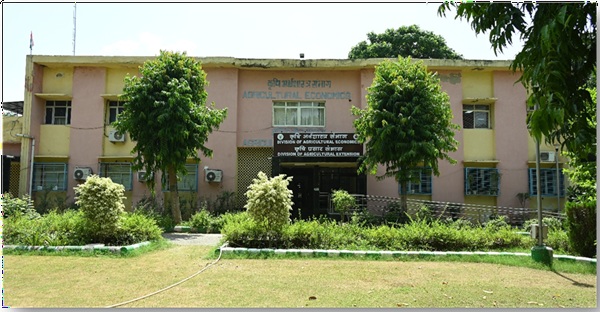
The Division of Agricultural Extension at ICAR-Indian Agricultural Research Institute, New Delhi, was formally established in October 1960 with the appointment of its first Head and staff. Before its establishment, extension activities of the Institute were undertaken under the Intensive Cultivation Scheme by the Division of Agronomy, with support from other divisions and the Delhi Administration. The beginnings of extension education at the Institute can be traced to 1955–56, when postgraduate training in Agricultural Extension was introduced under the Second Five Year Plan, which later developed into full-fledged M.Sc. and Ph.D. programmes.
Growth and Contributions of the Division
Since its inception in 1960, the Division of Agricultural Extension at ICAR-Indian Agricultural Research Institute has made significant contributions to the development of agricultural extension through innovative research, education, and capacity building. The Division has developed effective frameworks and models for extension research, curriculum design, teaching and training methodologies, and technology dissemination, along with service delivery systems aimed at rural transformation. Over the past six decades, it has played a flagship role in strengthening the extension profession by promoting participatory approaches to technology generation and transfer, farming system development, entrepreneurship, and gender empowerment. A major milestone in its journey was the conceptualization of the National Demonstration Project (1964–65), which accelerated the adoption of high-yielding varieties and improved agricultural practices. Many of the approaches and methodologies developed by the Division have subsequently served as foundational frameworks for extension programmes across the country.
Evolution of National-Level Extension Programmes
Over the years, several pioneering extension initiatives at the national level have originated from the Division, contributing significantly to agricultural development and farmer outreach across the country.
Major Initiatives:
• Intensive Cultivation Scheme (1950)
• Land Army (1951)
• Extension Centre at Nangloi (1955)
• National Demonstration Project (1964)
• Seed Village Programme, Jaunti Village (1964)
• Jawahar Seed Cooperative Society (1964)
• High Yielding Variety Programme (1965)
• Composite Demonstration (1971–72)
• Minikit Demonstration (1971–72)
• Operational Research Project (ORP) (1975)
• Single Window Delivery Mechanism (1986)
• Farmer-to-Farmer Seed Exchange (1988)
• Rural Resource Centre (2002)
Recognition and Leadership Role
The Division has also been instrumental in capacity building of extension professionals, master trainers, and farmers; promoting participatory technology development and transfer; advancing farming system and entrepreneurship development; and encouraging gender empowerment in agriculture. In recognition of its excellence, the Indian Council of Agricultural Research designated it as a Centre of Advanced Studies in 1994, which was later renamed as the Centre of Advanced Faculty Training in 2010, to provide leadership in training extension professionals from ICAR institutes, State Agricultural Universities, line departments, Krishi Vigyan Kendras, and other development organizations. The Division continues to strive for advancement in extension education and pro-poor, sustainable livelihood approaches through its ongoing research, teaching, and outreach activities.