भा.कृ.अ.प. - भारतीय कृषि अनुसंधान संस्थान | ICAR-Indian Agricultural Research Institute
ICAR-IARI, New Delhi

| English | || || |

भा.कृ.अ.प. - भारतीय कृषि अनुसंधान संस्थान
ICAR-Indian Agricultural Research Institute

Environment Science
Instrumental facilities

Instruments:

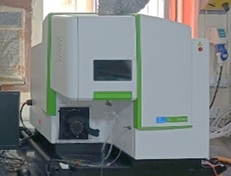
ICP-AES: Inductively Coupled Plasma Atomic Emission Spectroscopy is used to analyze analyse micronutrient (Fe, Cu, Zn, Mn, etc.), metalloids (B, Si, Ge, As, Sn) and heavy metals (Cd, Cr, Pb, Co etc.) in soil, plant and water samples


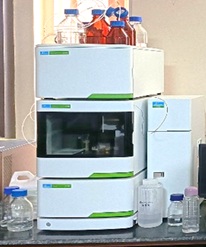
High Performance Liquid Chromatograph (HPLC): Used for pesticide detection and quantification, also used for identification of polar compounds and organic acids, sugars, amino acids, PAH


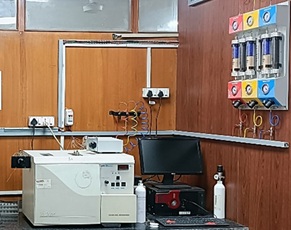
Gas Chromatograph (GC): GC is used to quantify GHG emission from soil, also used to quantify environmental contaminants (polycyclic aromatic hydrocarbons (PAHs), volatile organic compounds (VOCs), polychlorinated biphenyls (PCBs), and other organic pollutants.


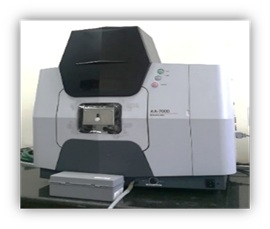
Atomic Absorption Spectroscopy (AAS): AAS is used to analyse micronutrient (Fe, Cu, Zn, Mn, etc.) and heavy metals (As, Cd, Cr, Pb, etc.) in soil, plant and water samples


Infrared Gas Analyzers (IRGAs): To measure the energy transmission and gas exchange between leaf and air, for estimating the photosynthesis, respiration, florescence parameters, canopy temperature, stomatal conductance, etc

lab5


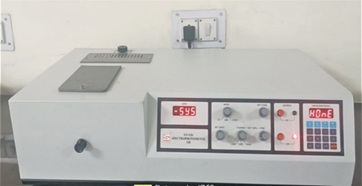
Spectrophotometer: Spectrophotometer is used to estimate soil enzymatic activity, chemical parameters (P, S, NO3-, NH4+, etc) and quality parameters of soil & plants

labs6


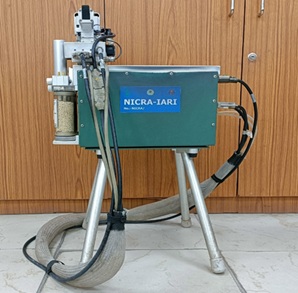
N Flow analyser: It is used to measure nitrogen content (NO3-, NO2- & NH4+) in soil, water, plant and fertilizer samples

labs7


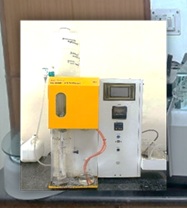
Nitrogen Distillation Unit: The Kjeldahl distillation unit is used to determine the nitrogen content (available and total N) of soil, water and plant samples

labs8


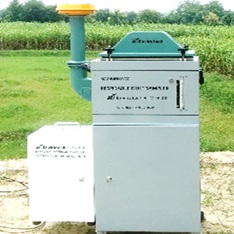
Respirable Dust Sampler (RDS): Respirable Dust Sampler is used for sampling ambient air pollutants (SO2, NO2, O3, NH3, PM10 and VOCs)

labs9


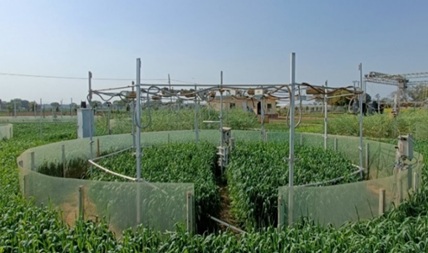
Free-Air Carbon Dioxide Enrichment Facility (FACE): FACE is used to study the effect of elevated CO2 on plants and soil. The system automatically maintains the set levels of CO2 (550±25 ppm) within rings.

labs10


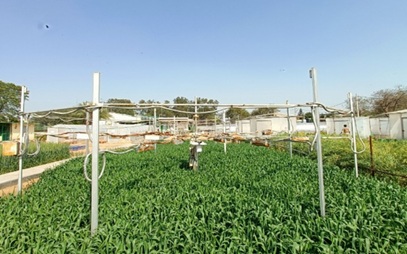
Free-Air CO2 & Temperature Enhancement (T-FACE): FATE is used to study the effect of elevated temperature on plants and soil. System uses IR heaters to elevate temperatures up to 3℃) to set level above ambient

labs11


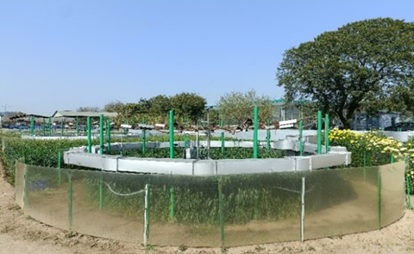
Free-Air Ozone & CO2 Enrichment Facility (O-FACE): FAOE is used to study the effect of elevated ozone on plants and soil. System uses ozone generator to elevate ozone to set level (~70 ppb) above ambient

labs12


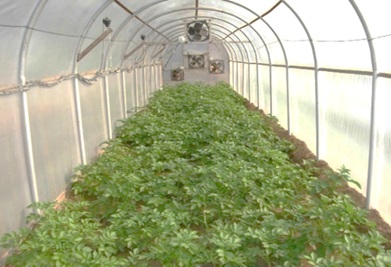
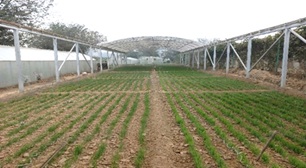
Temperature Gradient Tunnel (TGT):  TGT is a facility to create temperature gradation (1-~4℃) based on energy trapping within a tunnel due to cross air flow. This is used to study the effect of temperature on plants

labs13


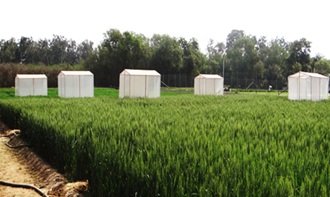
Open Top Chambers (OTCs): OTCs are the first-generation systems used to investigate effects of elevated CO2 and temperature on plant growth, development, yield and quality

labs14


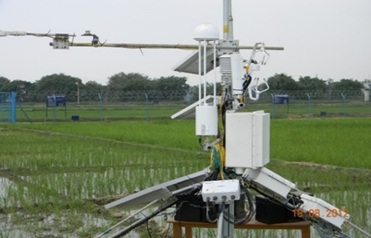
Eddy Covariance Flux Tower: Eddy covariance based GHG flux tower gives the continuous measurement (10 Hz) on gaseous (CO2, H2O, CH4) exchange from canopy over a larger area (Height of the tower*100)

labs15


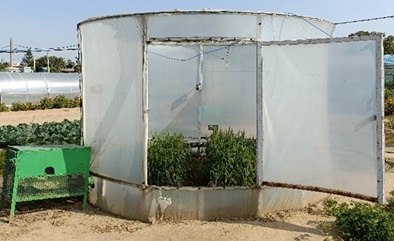
Rain-out Shelter (ROS): Rain-out shelter is used to create artificial dry spells to study the effect of rainfall variability on plants  

labs16


Chamber for Temperature Enhancement: These fabricated chambers are used to study the effect of temperature shocks at different developmental stages of crops

labs17


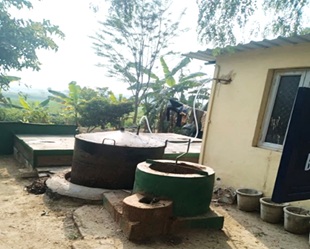
Biogas Plant: Biogas production can be done by using cattle dung, straw, leaves, vegetable waste, crop residue, etc. Methanogen bacteria grow under anaerobic conditions and produce a large amount of methane (50-60 %) along with CO2 (30-40%), hydrogen (1-5%) and nitrogen (1%). Biogas based energy has many uses, including cooking, heating, gas turbines for power generation. It is used in generators to produce electricity for homes, farms, businesses, and communities

labs18


Instruments:

ICP-AES: Inductively Coupled Plasma Atomic Emission Spectroscopy is used to analyze analyse micronutrient (Fe, Cu, Zn, Mn, etc.), metalloids (B, Si, Ge, As, Sn) and heavy metals (Cd, Cr, Pb, Co etc.) in soil, plant and water samples


High Performance Liquid Chromatograph (HPLC): Used for pesticide detection and quantification, also used for identification of polar compounds and organic acids, sugars, amino acids, PAH


Gas Chromatograph (GC): GC is used to quantify GHG emission from soil, also used to quantify environmental contaminants (polycyclic aromatic hydrocarbons (PAHs), volatile organic compounds (VOCs), polychlorinated biphenyls (PCBs), and other organic pollutants.


Atomic Absorption Spectroscopy (AAS): AAS is used to analyse micronutrient (Fe, Cu, Zn, Mn, etc.) and heavy metals (As, Cd, Cr, Pb, etc.) in soil, plant and water samples


Infrared Gas Analyzers (IRGAs): To measure the energy transmission and gas exchange between leaf and air, for estimating the photosynthesis, respiration, florescence parameters, canopy temperature, stomatal conductance, etc

lab5


Spectrophotometer: Spectrophotometer is used to estimate soil enzymatic activity, chemical parameters (P, S, NO3-, NH4+, etc) and quality parameters of soil & plants

labs6


N Flow analyser: It is used to measure nitrogen content (NO3-, NO2- & NH4+) in soil, water, plant and fertilizer samples

labs7


Nitrogen Distillation Unit: The Kjeldahl distillation unit is used to determine the nitrogen content (available and total N) of soil, water and plant samples

labs8


Respirable Dust Sampler (RDS): Respirable Dust Sampler is used for sampling ambient air pollutants (SO2, NO2, O3, NH3, PM10 and VOCs)

labs9


Free-Air Carbon Dioxide Enrichment Facility (FACE): FACE is used to study the effect of elevated CO2 on plants and soil. The system automatically maintains the set levels of CO2 (550±25 ppm) within rings.

labs10


Free-Air CO2 & Temperature Enhancement (T-FACE): FATE is used to study the effect of elevated temperature on plants and soil. System uses IR heaters to elevate temperatures up to 3℃) to set level above ambient

labs11


Free-Air Ozone & CO2 Enrichment Facility (O-FACE): FAOE is used to study the effect of elevated ozone on plants and soil. System uses ozone generator to elevate ozone to set level (~70 ppb) above ambient

labs12


Temperature Gradient Tunnel (TGT):  TGT is a facility to create temperature gradation (1-~4℃) based on energy trapping within a tunnel due to cross air flow. This is used to study the effect of temperature on plants

labs13


Open Top Chambers (OTCs): OTCs are the first-generation systems used to investigate effects of elevated CO2 and temperature on plant growth, development, yield and quality

labs14


Eddy Covariance Flux Tower: Eddy covariance based GHG flux tower gives the continuous measurement (10 Hz) on gaseous (CO2, H2O, CH4) exchange from canopy over a larger area (Height of the tower*100)

labs15


Rain-out Shelter (ROS): Rain-out shelter is used to create artificial dry spells to study the effect of rainfall variability on plants  

labs16


Chamber for Temperature Enhancement: These fabricated chambers are used to study the effect of temperature shocks at different developmental stages of crops

labs17


Biogas Plant: Biogas production can be done by using cattle dung, straw, leaves, vegetable waste, crop residue, etc. Methanogen bacteria grow under anaerobic conditions and produce a large amount of methane (50-60 %) along with CO2 (30-40%), hydrogen (1-5%) and nitrogen (1%). Biogas based energy has many uses, including cooking, heating, gas turbines for power generation. It is used in generators to produce electricity for homes, farms, businesses, and communities

labs18


List of minor Instruments

§  Soil Compaction meter: Soil Compaction Tester is an economical analog penetrometer used to determine the density of the soil

§  ELISA plate readers: Measure a variety of reactions in microplates

§  Gamma Chamber Facility: Primarily involving the use of ionizing radiation to induce changes in materials or for sterilization purposes

§  Leaf area meter: To quantify leaf area

§  NDVI Meter: Measure the health and density of vegetation

§  Flame photometer: To analyze samples for concentrations of alkali and alkaline earth metal ions

§  PM2.5 sampler: To collect and measure particulate matter (PM) with a diameter of 2.5 micrometers or less in the air

Canopy analyser: Used to study canopy structure and light interception

Instruments and Facilities

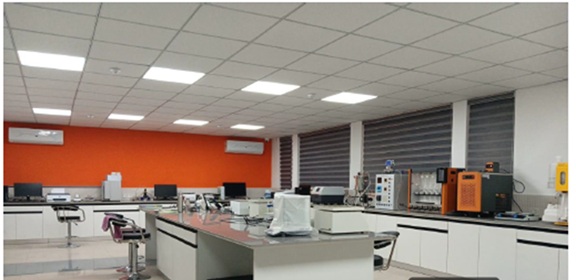
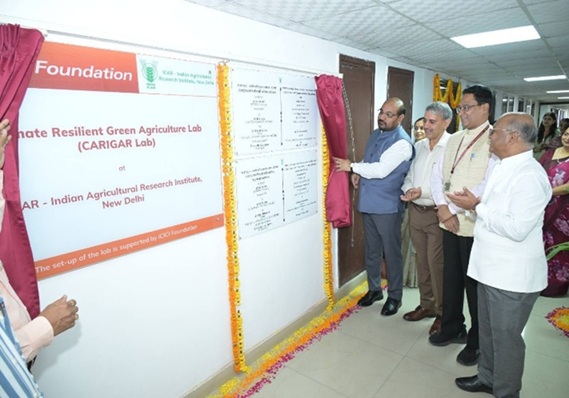
Climate Resilient Green Agriculture (CARIGAR) Lab

Division of Environmental Sciences

ICAR-Indian Agricultural Research Institute, New Delhi-12 


List of instruments and facilities in CARIGAR Lab

Instrument/ Facility

Fixed/Portable

Parameters can be analysed

CHNS Analyzer

Fixed

Total C, N, H and S in soil and plant samples

Portable FTIR Gas Analyzer

Portable

50 parameters of air (listed below*) and 7 parameters from soil: CO2, CH4, N2O, NH3, CO, C2H2 and H2O

Air Quality Monitoring Systems

Portable

10 parameters: CO, CO2, CH4, SO2, VOC, NO2, NH3, PM2.5, O3, NMHC

6-Channel Particulate Matter Analyser

Portable

6 different fractions of PM: 0.3, 0.5, 1, 2.5, 5 and 10 µm

Eddy Flux Tower

Fixed in field

Carbon flux, evapotranspiration, energy balance, and gas exchange

Canopy Analyzer with Image Processing System

Portable

Leaf area index (LAI), canopy cover, and light interception.

Micro-irrigation Systems

Fixed in field

Water discharge rate, irrigation efficiency, and uniformity fertigation.

Soil Testing Meter (Pusa STFR)

Fixed

14 parameters: pH, EC, Organic Carbon, N, P, K, S, Zn, Fe, Cu, Mn, B and gypsum/lime requirements

Water Quality Testing Meter

Portable

11 parameters of water: pH, ORP, Conductivity, DO, Salinity, Turbidity, GPS, Seawater Specific Gravity, TDS, Water Depth, Water Temp

Fourier Transform Infrared (FTIR) Spectrophotometer

Fixed

Functional groups and molecular composition of samples

Microwave Digestion System

Fixed

Soil and plant sample digestion for elemental analysis

Anaerobic Bio-digester

Fixed

Biogas production and methane content monitoring

Nitrogen Analyzer

Fixed

Nitrogen or protein content in samples

Fat Analyzer

Fixed

Crude fat content in food and feed samples

Analytical Balance

Fixed

Accurate mass measurement of samples

Moisture Meter

Fixed

Moisture content in samples

Refrigerated Circulating Bath

Fixed

Temperature-controlled reaction or sample conditions

Semi-automatic Fiber Analyzer

Fixed

Crude fiber analysis

Soil ORP Meter

Fixed

pH and ORP

Micro Centrifuge

Fixed

Separation of cellular components or particulates by density

DD Water Unit

Fixed

Double distilled water

pH and EC meter

Fixed

pH and EC of soil and water samples


Ice Flaking Machine

Fixed

Production of ice flakes

Nano-particle Size Analyzer with Zeta Potential

Fixed

Particle size distribution and zeta potential

Refrigerated Incubator Shaker

Fixed

Microbial growth, incubation conditions, and culture kinetics.

UV-Vis Spectrophotometer with Scanning Facilities

Fixed

Absorbance, concentration, and optical properties of compounds.

Raman Spectrometer

Fixed

Molecular structure, chemical composition, and vibrational modes.

Hydride Generator for AAS

Fixed, attached to AAS

Trace elements like As, Se, Sb, and Hg.

Water Purification and Recycling System

Fixed, near to NRL auditorium gate

For neutralization and purification of lab water


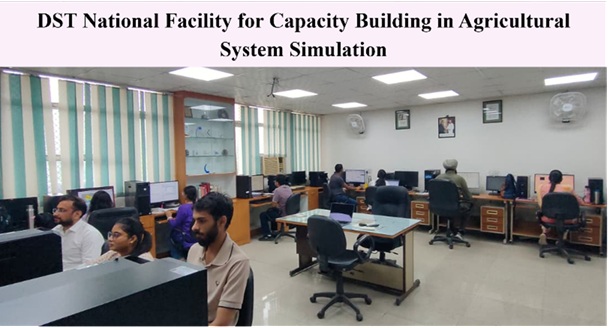
DST National Facility for Capacity Building in Agricultural System Simulation

Several DSS such as InfoCrop, InfoSoil, InfoRCT etc. developed to assist environmental impact assessment and sustainable land-use management. InfoCrop v2.1 (a process based dynamic model to simulate growth and yield of rice, wheat, maize, pearl millet, mustard, soybean, ground nut, chick pea, pigeon pea, potato and cotton), a decision support system for crop management in tropics, CocoSim v1 (InfoCrop-Coconut), DRAKSHA (VitisMod) for vineyards, IKSHU Cane v1 (sugarcane), CauliSim (cauliflower), VignaRad Sim (green gram), Spinach model, Spatial InfoCrop, Cropping System Model, geo-spatial model, etc. The Environmental Simulation Modeling Lab recognized as the DST National Facility for Capacity Building in Agricultural System Simulation.


भा.कृ.अनु.प –भारतीय कृषि अनुसंधान संस्थान


पूसा परिसर,
नई दिल्ली - 110012
हमें खोजें : गूगल मैप्स